CSS Grid Lanes and the Long Road Home from Masonry
There was a time when the web fell in love with imbalance.
Pinterest arrived with its cascading masonry layout, and suddenly, the internet decided that straight lines were overrated. Columns staggered. Images flowed like bricks stacked by an impatient but talented mason. It felt organic, modern, alive. Soon enough, everyone copied it. Blogs, portfolios, product galleries.
“The web became a wall of photos, endlessly tall, endlessly scrolling.”
Masonry looked effortless, but implementing it was anything but. JavaScript hacks. Reflows. Layout thrashing. Libraries stacked on top of libraries, all to fake what the layout engine simply could not do. CSS, the language of layout, sat on the sidelines while JavaScript carried the furniture, “Pivot.”
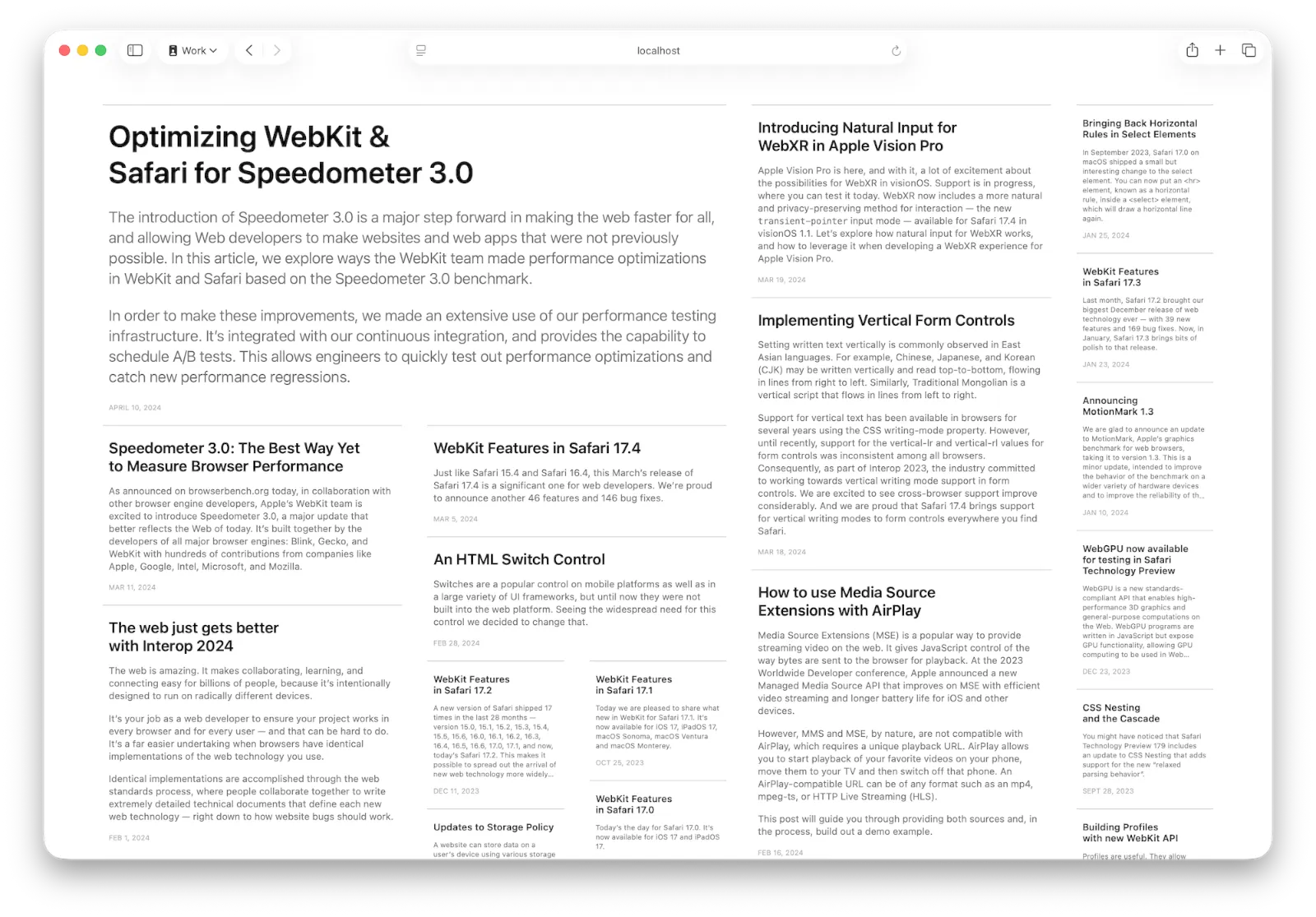
CSS Grid Lanes
With CSS Grid Lanes, the platform quietly takes a step toward fixing an old wrong. Introduced by WebKit, Grid Lanes allow authors to reason about columns as first-class layout paths. Grid Lanes is declarative and predictable.
There is also something nostalgic about this correction. The web chased visual chaos because the tools were crude. Now the tools are catching up, and order can return without killing the character. Masonry no longer needs to be a hack, nor a JavaScript tax paid forever.
The Pinterest era showed us what designers wanted. CSS Grid Lanes suggest the platform has finally been listening. Sometimes progress is an apology, delivered quietly, many years later.